
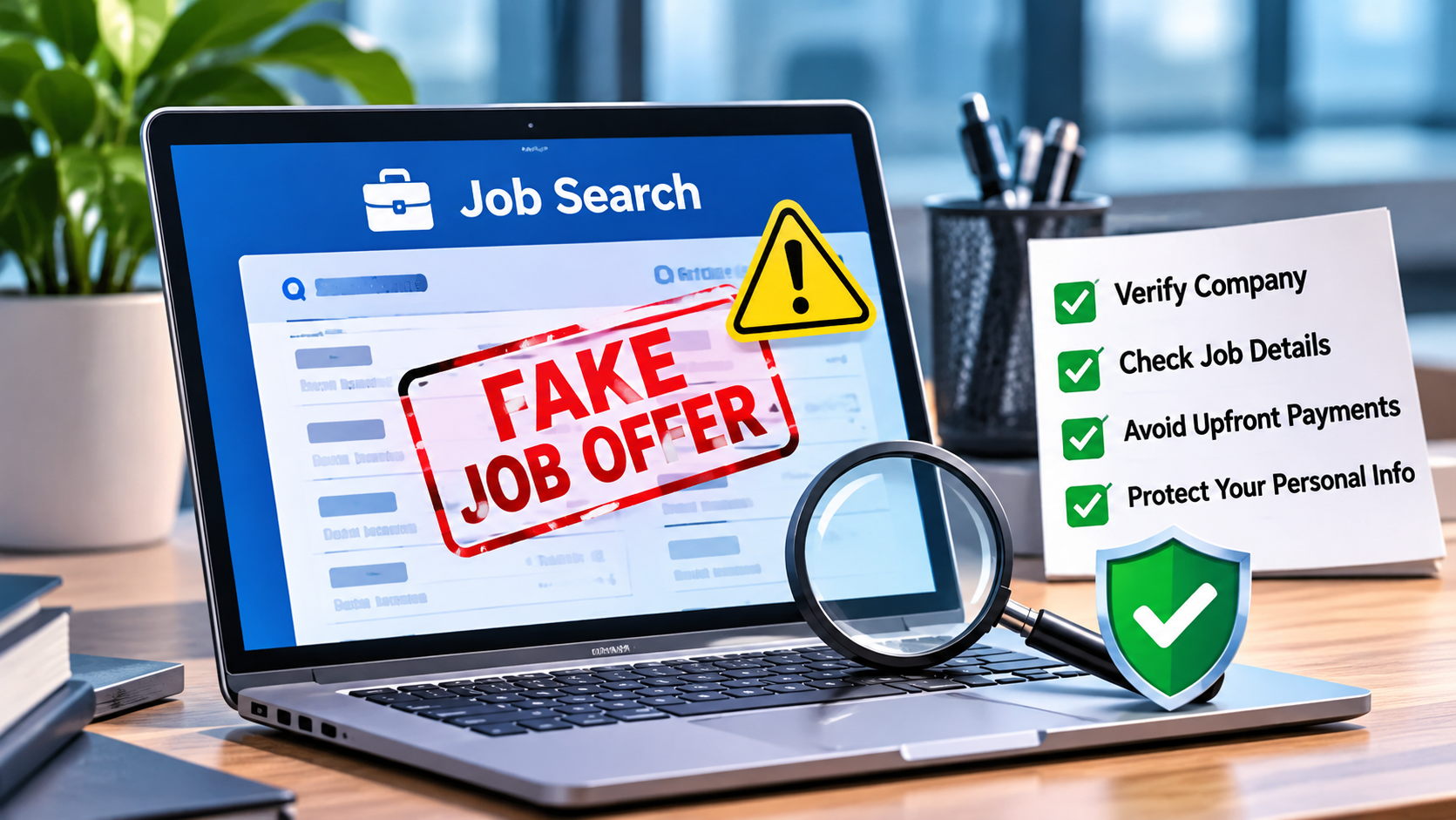
Job scams are a growing concern for job seekers looking for employment opportunities online. Scammers often target people who are actively searching for work, especially those who need a job urgently or are interested in international employment opportunities.
Fraudsters may copy the names of genuine companies, create fake job advertisements, and use professional-looking emails to convince applicants that an opportunity is legitimate. Some promise unusually high salaries, easy work, or guaranteed employment to encourage people to share personal information or send money.
Whether you are searching for remote jobs, work-from-home opportunities, or employment abroad, understanding how to identify fake job offers can help protect your finances, personal information, and professional future.
What Is a Job Scam?
A job scam is a fraudulent employment offer designed to deceive job seekers. Scammers may pretend to represent a legitimate company, recruitment agency, or international employer to gain the trust of applicants.
Their goal is usually to steal money, collect sensitive personal information, or gain access to financial accounts.
Fake job offers can appear on social media, messaging applications, job portals, email, and even websites that look professional. Some scammers also contact candidates directly and claim that their CV has been selected for a high-paying position.
Recognising common warning signs is the first step towards protecting yourself during your job search.
Common Warning Signs of Fake Job Offers
Although job scams can look convincing, many share similar characteristics. Pay attention to the following warning signs before applying for a position or accepting an employment offer.
1. The Employer Asks You to Pay Money
One of the most common signs of a job scam is a request for payment before you can start working.
Scammers may ask for money for registration, recruitment, training, background checks, uniforms, equipment, security deposits, or job placement services.
Be especially cautious if someone claims that you must pay a fee immediately to secure your position or complete the hiring process.
Legitimate employers generally do not require applicants to pay recruitment fees to obtain a job. Some legitimate processes may involve specific administrative or government fees, so verify any such requirement through the relevant official authority before making a payment.
2. You Receive a Job Offer Without a Proper Interview
Another warning sign is receiving an employment offer without a credible interview or assessment process.
Scammers may tell you that your application has been approved after a brief conversation on WhatsApp, Telegram, or another messaging application.
Some fake recruiters claim that they have reviewed your CV and selected you for a position without asking meaningful questions about your qualifications or experience.
Although legitimate employers may use different recruitment methods, a suspiciously easy hiring process should always be verified.
3. The Salary Is Unrealistically High
Fake job advertisements often promise unusually high salaries for simple tasks that require little experience or effort.
For example, an advertisement may promise a very high monthly income for basic data entry, online form filling, or watching videos for a few hours each day.
Before applying, research the typical salary range for the position and compare it with the employer's offer.
Be particularly careful if the advertisement promises guaranteed earnings without clearly explaining the responsibilities, working hours, or required qualifications.
4. The Recruiter Uses an Unofficial Email Address
Professional companies usually communicate with applicants through their official email domains.
For example, a recruiter claiming to represent a company may contact you from a Gmail or Yahoo address instead of the company's official email address.
This does not automatically mean the offer is fraudulent, but it is a reason to investigate further.
Check the company's official website and compare the email domain with the address used by the recruiter. Be cautious of email addresses that contain spelling mistakes, extra characters, or unusual domain names.
5. You Are Pressured to Accept Immediately
Scammers often create a sense of urgency to prevent applicants from checking whether an offer is genuine.
They may tell you that the position will disappear within an hour, that you must pay a fee immediately, or that you should not discuss the offer with anyone else.
These pressure tactics are designed to make you act before you have time to verify the employer.
A genuine employer should allow you reasonable time to review the job description, understand the employment terms, and ask questions about the position.
6. The Recruiter Requests Sensitive Information Too Early
Some scammers use fake job applications to collect personal and financial information from job seekers.
They may ask for your passport, national identity card, bank account details, credit card information, or other sensitive documents before providing a formal offer or explaining why the information is required.
Be cautious when sharing personal information with an employer you have not verified.
Legitimate employers may need identity or banking information during the formal hiring and onboarding process, but you should confirm the company's identity and understand the purpose of each request before sharing sensitive documents.
How to Verify Whether a Company Is Genuine
Before accepting a job offer, take a few minutes to verify the employer and the recruitment process.
The following steps can help you identify suspicious vacancies and reduce the risk of becoming a victim of employment fraud.
- Visit the official company website. Search for the company independently and check whether it has a professional website with accurate contact information.
- Check the company's careers page. Look for the advertised position on the employer's official recruitment website.
- Verify the recruiter's identity. Search for the recruiter on LinkedIn and check whether their employment history matches the company they claim to represent.
- Research the company's reputation. Search for the company name alongside terms such as "scam", "fraud", "complaint", or "reviews".
- Contact the company directly. Use the phone number or email address published on the official website rather than relying on contact details provided in a suspicious message.
- Review the employment contract. Confirm the job title, salary, responsibilities, working hours, and employment conditions before accepting the offer.
If the company cannot be verified or the recruiter refuses to provide clear information about the position, consider avoiding the opportunity.
How to Identify Fake Remote Job Offers
Remote jobs and work-from-home opportunities are attractive to many job seekers because they offer flexibility and access to international employers.
However, scammers frequently use remote job advertisements to target applicants who are looking for online employment.
Common remote job scams include:
- Fake data entry jobs: Applicants are promised high earnings for simple tasks but are later asked to pay registration or verification fees.
- Task-based scams: Candidates are asked to complete online tasks and may initially receive small payments before being pressured to deposit larger amounts of money.
- Fake equipment purchases: A supposed employer sends a cheque or asks applicants to buy equipment from a specific vendor, then requests that money be transferred elsewhere.
- Identity theft: Scammers collect personal documents by pretending to conduct background checks or employment verification.
- Fake training programmes: Applicants are asked to pay for mandatory training that does not lead to a genuine job.
Always research the employer, verify the job advertisement, and avoid sending money to secure a remote position.
Applying for Jobs Abroad? Take Extra Precautions
International job opportunities can provide valuable professional experience and career growth. However, overseas recruitment scams can involve significant financial losses and serious legal or immigration problems.
If you are applying for employment abroad, take additional steps to verify the recruitment agency and the employer.
- Check whether the recruitment agency is licensed by the relevant government authority.
- Verify the employer's identity and confirm that the vacancy exists.
- Request a written employment contract that clearly explains the salary, job responsibilities, working hours, and benefits.
- Verify the work visa requirements through the destination country's official immigration website.
- Confirm any recruitment, visa, or administrative fees through official sources before making payments.
- Keep copies of your contract, payment receipts, and communications with the recruiter.
For Pakistani job seekers, overseas employment information and recruitment agency verification can be checked through the official Bureau of Emigration and Overseas Employment website.
Never travel abroad for employment without understanding your visa conditions and verifying the legitimacy of the job offer.
What to Do If You Have Been Scammed
If you believe you have received a fake job offer or have already shared money or personal information with a scammer, take action as soon as possible.
The following steps can help limit potential damage and protect your accounts.
- Stop communicating with the scammer. Do not send additional money or provide further personal information.
- Save all evidence. Keep screenshots of messages, emails, job advertisements, payment receipts, phone numbers, and account details.
- Contact your bank or payment provider. If you sent money or shared financial information, notify your bank immediately and ask whether the transaction can be stopped or your account secured.
- Change your passwords. Update passwords for affected accounts and any other accounts that use the same password.
- Secure your identity documents. If you shared identity information, contact the relevant authority to ask about protective measures.
- Report the scam. Notify the relevant local authorities and report the fraudulent advertisement to the website or platform where you found it.
- Inform Tuveleeds. If you encountered a suspicious vacancy on our platform, email the details to contact@tuveleeds.com so that the listing can be reviewed.
Reporting fraudulent job advertisements can help protect other applicants from similar scams.
How to Search for Jobs Safely
Taking a few precautions during your job search can help you avoid fraudulent employers and focus on genuine employment opportunities.
- Use reputable job portals and official company career pages.
- Research employers before sharing personal information.
- Read job descriptions carefully and look for clear responsibilities and requirements.
- Be cautious of unusually high salaries and guaranteed employment claims.
- Never pay someone who promises to guarantee a job.
- Keep records of your applications, interviews, and employment offers.
- Ask questions if any part of the recruitment process seems suspicious.
When searching for employment online, taking time to verify an opportunity is always better than rushing into a decision.
Frequently Asked Questions About Job Scams
Can a legitimate employer ask for money before hiring me?
Legitimate employers generally do not require applicants to pay recruitment fees to secure a job. If a payment is requested, verify the requirement through official sources and be cautious of anyone promising guaranteed employment in exchange for money.
Are all remote job offers from messaging applications fake?
No. Some genuine employers use messaging applications for communication. However, an offer received through a messaging application should be independently verified, especially if the recruiter asks for money, sensitive information, or immediate action.
How can I verify an overseas recruitment agency?
Check the agency's licence through the relevant official overseas employment authority, verify the employer, and review the written contract and visa requirements before making any payment or travel arrangements.
What should I do if I shared my passport or identity card with a scammer?
Stop communicating with the scammer, preserve all evidence, and contact the relevant identity or government authority for guidance. If you also shared financial information, notify your bank immediately.
Conclusion
Job scams can affect anyone, regardless of education, experience, or professional background. Fraudsters often use attractive salaries, fake company identities, and urgent messages to convince applicants to make poor decisions.
By checking the employer's identity, reviewing the job description, verifying recruitment agencies, and protecting your personal information, you can reduce the risk of becoming a victim of employment fraud.
Remember that a genuine job opportunity should have a clear recruitment process, verifiable employer details, and transparent employment conditions. Take your time, ask questions, and never send money simply because someone promises you a job.
At Tuveleeds, we encourage job seekers to research employers carefully and report suspicious vacancies so that others can search for employment opportunities more safely.