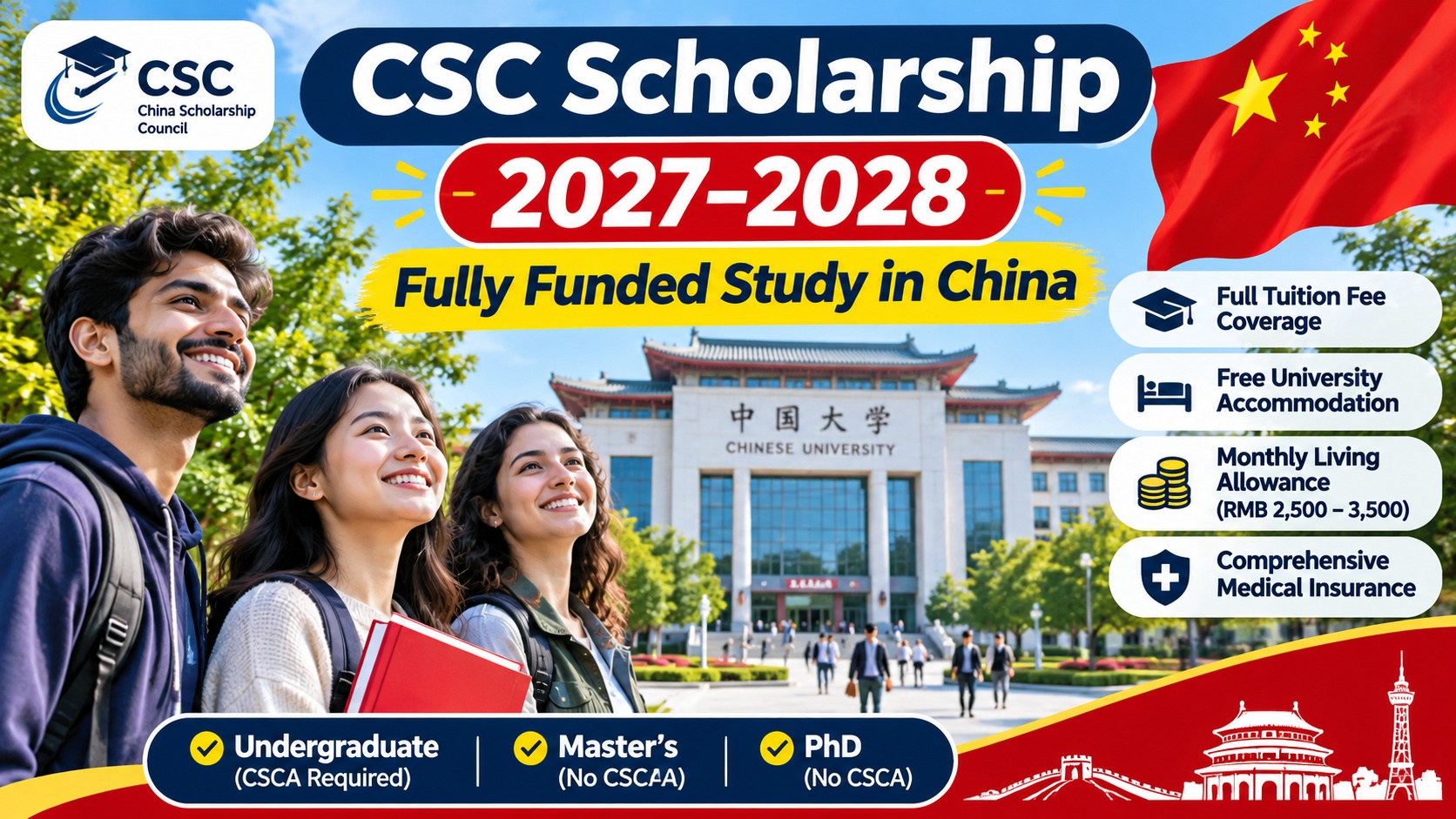
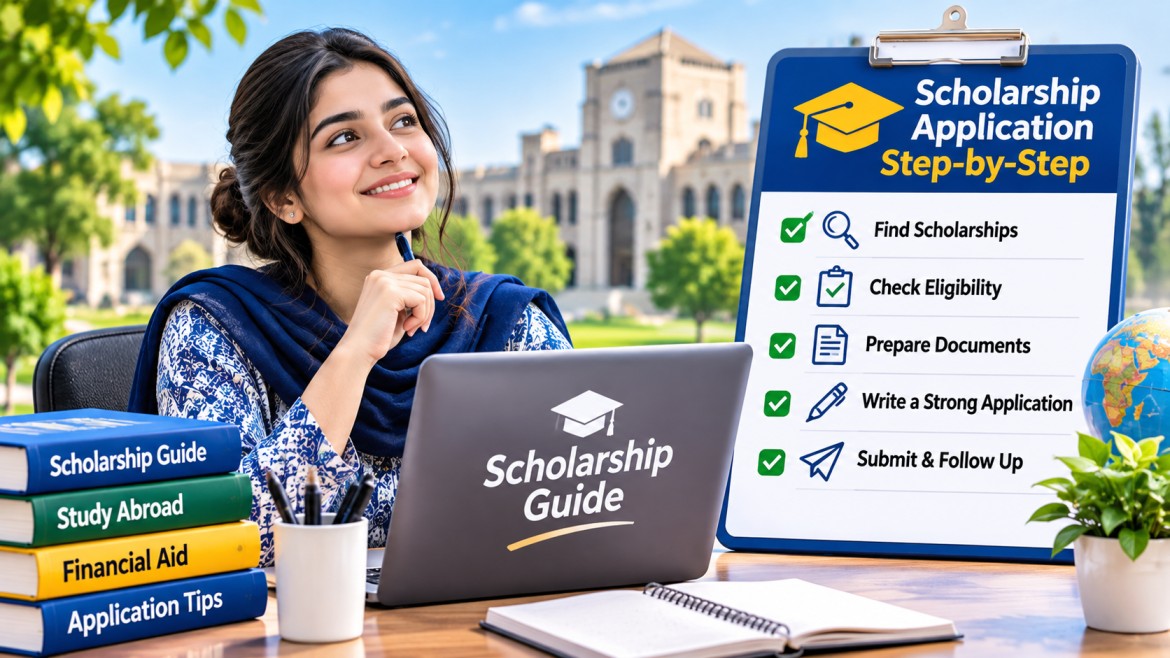
Winning a scholarship is an excellent way to make higher education more affordable and access educational opportunities at universities around the world. Scholarships can help students cover tuition fees, living expenses, travel costs, and other academic expenses, depending on the funding programme.
However, securing a scholarship requires more than good academic grades. Successful applicants usually research suitable opportunities, understand the eligibility requirements, prepare their documents carefully, and submit strong applications before the deadline.
Whether you are planning to study for a bachelor's degree, master's degree, or PhD, this guide explains how to find scholarships, prepare your application, avoid common mistakes, and improve your chances of receiving financial support for your education.
What Is a Scholarship?
A scholarship is financial assistance awarded to students to support their education. Scholarships may be provided by governments, universities, private organisations, charitable foundations, or international institutions.
Unlike many education loans, scholarships generally do not require repayment, provided that recipients meet the award's conditions.
Scholarships can be awarded based on academic performance, financial need, leadership potential, research interests, professional achievements, or other eligibility criteria.
Understanding the different types of scholarships can help you identify opportunities that match your academic background and financial needs.
Types of Scholarships Available for International Students
Scholarship programmes vary in their eligibility requirements, funding amounts, and application procedures. Some provide complete financial support, while others cover only a portion of educational expenses.
1. Fully Funded Scholarships
Fully funded scholarships generally cover major educational expenses, such as tuition fees and living costs. Depending on the programme, they may also include accommodation, health insurance, travel expenses, and a monthly stipend.
These scholarships are highly competitive, so applicants should carefully review the selection criteria and prepare strong applications.
2. Partially Funded Scholarships
Partially funded scholarships provide financial assistance for specific educational expenses. They may cover a percentage of tuition fees, a fixed amount of funding, or selected living expenses.
Students applying for partial scholarships should calculate their remaining costs and determine whether they can afford the additional expenses.
3. Merit-Based Scholarships
Merit-based scholarships are awarded to students who demonstrate strong academic performance, leadership skills, exceptional talent, or significant achievements.
Applicants may need to provide academic transcripts, recommendation letters, awards, or evidence of extracurricular activities.
4. Need-Based Scholarships
Need-based scholarships support students who require financial assistance to pursue higher education.
These programmes may ask applicants to provide financial information, family income details, or other documents demonstrating their financial circumstances.
5. Research Scholarships
Research scholarships are commonly available for master's and PhD students who intend to conduct research in a specific academic field.
Applicants may need to submit a research proposal, identify a potential supervisor, or demonstrate relevant academic and research experience.
Step 1: Define Your Scholarship and Study Goals
Before searching for scholarships, identify what you want to study and where you want to study. A clear academic goal will help you focus on relevant programmes and avoid wasting time on opportunities that do not match your plans.
Consider the following questions:
- Are you applying for a bachelor's, master's, or PhD programme?
- Which academic field or specialisation interests you?
- Which countries or universities would you consider?
- Do you need a fully funded scholarship or would partial funding be sufficient?
- What are your academic qualifications and current grades?
- Do you have relevant work experience, research experience, or professional achievements?
For example, a student interested in computer science may focus on universities offering scholarships for artificial intelligence, software engineering, data science, or cybersecurity.
Defining your goals will make it easier to identify scholarships that match your qualifications and long-term career objectives.
Step 2: Find Scholarships from Reliable Sources
Once you have defined your study goals, begin researching available scholarships. Use official sources whenever possible to ensure that the information is accurate and the application process is legitimate.
Some useful sources include:
- Government scholarship programmes: Many countries offer scholarships to international students through official government initiatives.
- University scholarship pages: Universities often publish information about merit-based awards, need-based assistance, and funding for international students.
- International organisations: Educational and development organisations may provide scholarships for students pursuing specific academic or professional goals.
- Research institutions: Universities and research centres may offer funding for postgraduate research and doctoral studies.
- Tuveleeds scholarships section: Browse our scholarships section to explore scholarship opportunities and find programmes that may match your academic interests.
When researching a scholarship, record its official website, eligibility requirements, application deadline, funding coverage, and required documents.
Always confirm important details through the scholarship provider's official website before submitting an application.
Step 3: Check Scholarship Eligibility Requirements
One of the most important steps in the scholarship application process is checking whether you meet the eligibility requirements.
Scholarship providers may have specific rules regarding nationality, academic qualifications, age, work experience, language proficiency, and the intended field of study.
Carefully review the following requirements:
- Nationality: Confirm whether applicants from your country are eligible.
- Academic qualifications: Check the minimum GPA, percentage, degree classification, or previous education requirements.
- Age restrictions: Some scholarships have age limits for particular study levels.
- Work experience: Certain postgraduate programmes require relevant professional experience.
- Language proficiency: Check whether IELTS, TOEFL, or another language test is required.
- Field of study: Confirm that your intended subject is included in the scholarship programme.
Do not assume that meeting the basic requirements guarantees selection. Scholarships may receive applications from many qualified candidates, so the quality of your application also matters.
Focus your efforts on opportunities where you meet the eligibility criteria and can demonstrate a strong academic or professional profile.
Step 4: Prepare Your Scholarship Application Documents
Scholarship applications often require several documents to verify your academic qualifications, professional experience, and personal information.
Preparing these documents early can help you avoid delays and ensure that your application is complete before the deadline.
Common scholarship application documents include:
- Academic transcripts: Official records of your previous academic performance.
- Degree certificates: Documents confirming the degrees or qualifications you have completed.
- Language test results: IELTS, TOEFL, or other approved test scores, if required.
- Recommendation letters: Letters from teachers, professors, supervisors, or other suitable referees.
- CV or resume: A summary of your education, work experience, achievements, and relevant skills.
- Passport copy: A valid passport or other identification document, where required.
- Statement of Purpose: A personal statement explaining your academic interests, motivation, and career goals.
- Research proposal or study plan: A document outlining your intended research or academic objectives, if required.
Some scholarship providers may also request financial documents, medical certificates, proof of employment, or additional application forms.
Check whether documents must be translated, notarised, certified, or submitted in a specific format.
Step 5: Write a Strong Scholarship Statement of Purpose
Your Statement of Purpose is an important part of many scholarship applications. It allows the selection committee to understand your academic background, motivation, personal experiences, and future ambitions.
A strong scholarship SOP should explain:
- Why you have chosen your intended field of study.
- How your previous education and experience have prepared you for the programme.
- Why you selected the particular university or scholarship opportunity.
- What you intend to achieve after completing your education.
- How you plan to use your knowledge and skills to contribute to your community, country, or professional field.
Use specific examples to support your statements. You could discuss an academic project, professional achievement, research interest, or challenge that influenced your decision to pursue further education.
Avoid generic claims such as "I am a hardworking and passionate student" without providing evidence. Instead, explain what you have accomplished and what you learned from the experience.
For additional guidance, read our guide on writing a compelling Statement of Purpose and learn how to structure your application essay effectively.
Step 6: Prepare for Scholarship Interviews
Some scholarship programmes require applicants to attend an interview as part of the selection process.
The interview allows the selection committee to evaluate your motivation, communication skills, academic interests, and suitability for the scholarship.
Common scholarship interview questions include:
- Why do you want to study this particular subject?
- Why have you selected this university or country?
- What are your academic and professional goals?
- How will the scholarship help you achieve your ambitions?
- What challenges have you faced, and how did you overcome them?
- How do you plan to contribute to your community or professional field after graduation?
Prepare clear and honest answers that reflect your actual experiences and goals.
Research your chosen programme, practise speaking about your achievements, and prepare questions that demonstrate your genuine interest in the opportunity.
If the interview is conducted online, test your internet connection, camera, microphone, and meeting software beforehand.
Step 7: Submit Your Scholarship Application Before the Deadline
Scholarship deadlines are strict, and late applications may not be considered. Submit your application several days before the official deadline whenever possible.
Before submitting, review your application carefully and confirm that:
- All required fields have been completed.
- Every document has been uploaded in the correct format.
- Your personal information matches your official documents.
- Your Statement of Purpose follows the required instructions.
- Your recommendation letters have been submitted, if required.
- You have completed any separate university admission application.
After submitting your application, save the confirmation email and keep a copy of the application and supporting documents.
Create a simple tracking system to monitor application deadlines, interview dates, admission decisions, and any additional requirements.
Common Scholarship Application Mistakes to Avoid
Many students miss scholarship opportunities because of avoidable errors during the application process.
To improve your chances of submitting a strong application, avoid the following mistakes:
- Applying without checking eligibility: Review the requirements before investing time in an application.
- Missing deadlines: Keep a calendar of important dates and submit applications early.
- Submitting incomplete documents: Check the application instructions and ensure every required document is included.
- Using a generic SOP: Tailor your personal statement to the specific scholarship and programme.
- Providing inaccurate information: Ensure that all academic, professional, and personal details are correct.
- Ignoring application instructions: Follow the required word limits, document formats, and submission procedures.
- Waiting until the last minute: Give yourself enough time to obtain recommendation letters and correct any application errors.
How to Avoid Scholarship Scams
Scholarship scams can target students who are searching for financial assistance or international education opportunities.
Be cautious of individuals or organisations that promise guaranteed scholarships in exchange for money.
- Verify scholarship announcements through the official provider's website.
- Be suspicious of messages claiming that you have won a scholarship you never applied for.
- Do not share sensitive personal or financial information with unverified organisations.
- Check whether the scholarship provider has a legitimate application process and published eligibility criteria.
- Be careful with unofficial agents who claim they can guarantee selection or admission.
Important: Never pay someone who promises to guarantee a scholarship award. Legitimate scholarship programmes have official selection procedures, and no agent can guarantee that you will be selected.
Some legitimate universities or scholarship programmes may charge separate application or administrative fees. Always verify any requested payment through the official provider before proceeding.
Final Scholarship Application Checklist
Before submitting your application, use this checklist to make sure you are ready.
- Have you identified scholarships that match your academic goals?
- Have you checked the official eligibility requirements?
- Have you confirmed the application deadline?
- Have you prepared all required academic and personal documents?
- Have you written a strong and personalised Statement of Purpose?
- Have you requested recommendation letters early?
- Have you reviewed the application for spelling, grammar, and accuracy?
- Have you saved a copy of your application and submission confirmation?
Conclusion
Winning a scholarship requires careful planning, consistent effort, and a well-prepared application. By identifying suitable programmes, checking eligibility requirements, preparing your documents early, and writing a compelling Statement of Purpose, you can improve your chances of securing financial assistance for your education.
Start researching scholarship opportunities as early as possible and create a clear plan for completing each application. Focus on programmes that match your qualifications, follow the official instructions, and present your academic and professional achievements honestly.
Explore the latest opportunities in our scholarships section and always confirm application requirements and deadlines on the scholarship provider's official website.